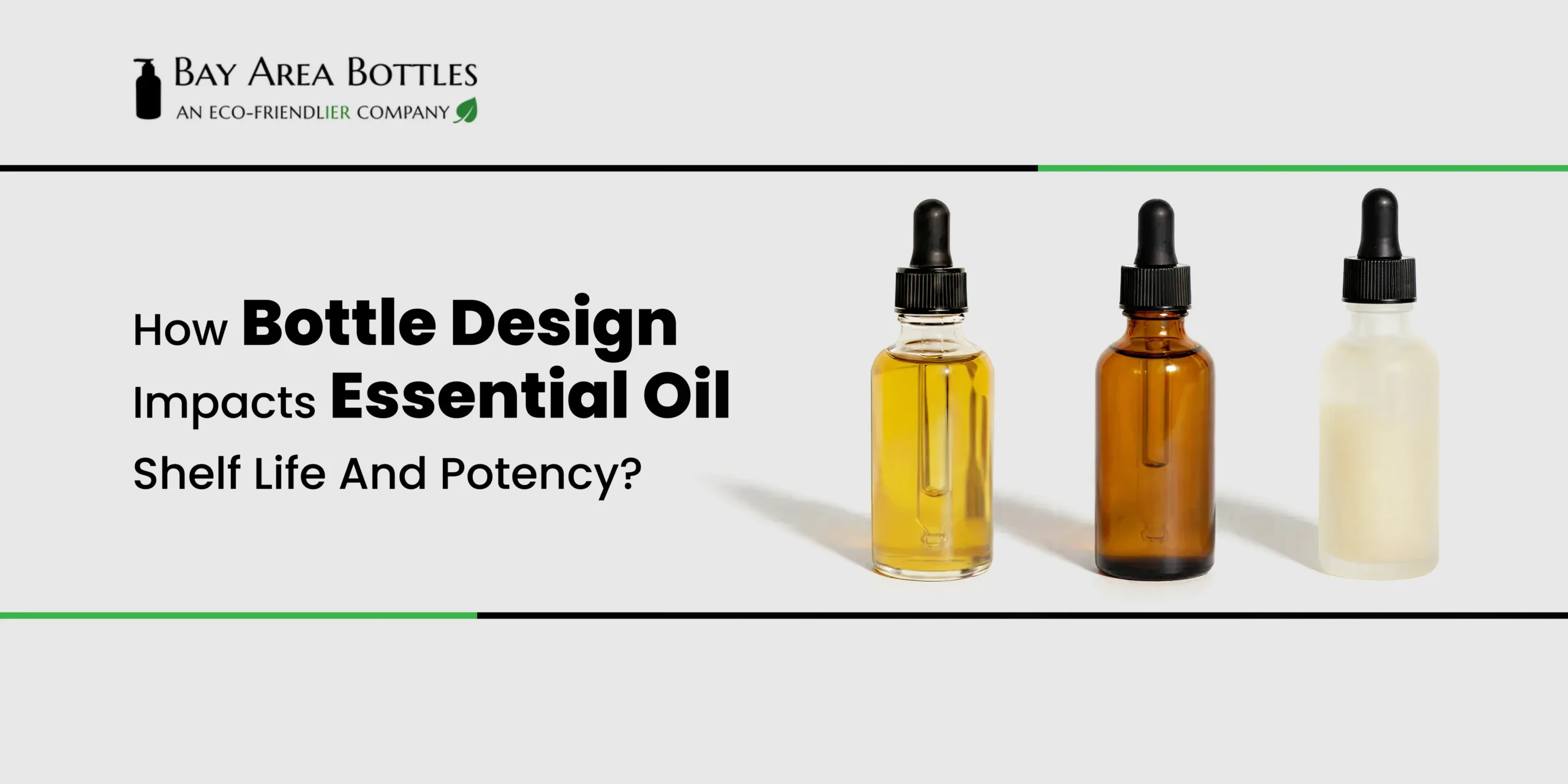
Essential oils are highly concentrated plant extracts. They are highly volatile, and even small storage mistakes can affect them. It can reduce their potency, aroma, and even therapeutic value. Most people focus only on sourcing quality oils. But few understand how essential oil bottles directly affect shelf life.
The bottle’s shape, closure type, and glass quality all play a critical role. They can help in protecting oils from light and oxygen. Bottle design can even protect against heat and contamination. Hence, it’s essential to understand how bottle design can impact essential oils. There are plenty of questions. Which shape is best for shelf life? Can a specific design protect the potency of essential oils better? Which bottle can store essential oils for longer? And many such questions.
That’s why we have compiled a complete guide. This will help you understand how different glass oil bottles impact essential oil stability. We will help you choose the right design for essential oils. So, you can have long-term storage and better product performance.
Essential oils are volatile organic compounds (VOCs). According to the National Institutes of Health (NIH), exposure to light, oxygen, and heat accelerates oxidation and chemical breakdown in essential oils. This will greatly reduce their effectiveness over time.
Bottle design determines how much air enters the container and how evenly the temperature is maintained. Meanwhile, the color of the bottle determines how well the light is blocked. Poorly designed oil bottles can cause essential oils to evaporate or oxidize faster. The right bottle design protects the oil from environmental stressors.
You can also choose bottles with different neck finishes and caps to make dispensing easier and more precise.
Most essential oils are very sensitive. Many environmental elements can have devastating effects on their potency and shelf life.
One of the fastest ways for essential oils to lose their effectiveness is through exposure to UV light. UV rays initiate photochemical reactions, which degrade the fragile aromatic compounds responsible for the particular scent of an oil or any resultant therapeutic properties. Once these compounds have degraded, the oil may smell weaker, different, or even unpleasant.
Of all essential oils, citrus-based essential oils are the most sensitive to UV light. These oils contain high levels of volatile compounds, such as limonene, which oxidize at a very rapid rate when exposed to light. Even brief periods of exposure through clear or thin glass can initiate the degradation process. This explains why amber or cobalt glass bottles represent the gold standard in the handling and storage of essential oils. These dark-colored glass bottles greatly hinder UV entry and thus support oil integrity.
When oxygen enters an essential oil bottle, oxidation begins almost immediately. The chemical shift that happens in the process alters the oil’s structure and cuts down on its strength; sometimes it can even become skin-irritating. As time goes on, oxidized oils lose their therapeutic value and may even become unsafe for topical use.
How quickly oxidation occurs is determined by how reactive an oil is. The lighter, more volatile oils, most citrus and florals, oxidize at a much faster rate compared to heavier oils like patchouli or vetiver. Each time the bottle is opened, more oxygen enters the container, and the rate of deterioration increases accordingly. Poor seals or loose caps maintain exposure to oxygen, which can render an oil ineffective well in advance of the shelf life labeled on the bottle.
The amount of surface exposure of the oil to the air determines the speed of oxidation. Essential oils that spread into a wider surface inside the container can interact more with oxygen molecules. This increased contact accelerates chemical reactions that degrade the oil.
Highly concentrated liquids, such as essential oils, are especially reactive. Once oxidation starts on the surface, it doesn’t stay localized there. The reaction works its way through an entire bottle. Eventually, it degrades all of the oil inside the bottle.
Poorly designed bottles that have a wide opening or inadequate internal design expose more oil to the air. This flaw in the design promotes the possibility of rapid degradation. Narrow-necked bottles and dropper-style closures reduce surface exposure and slow this process.
The material used to make the bottle directly influences the protection level the essential oil will have from external factors. Glass is the preferred material since it is non-reactive and does not absorb oils or release chemicals into them. In turn, plastic bottles may interact with essential oils, leading to contamination, leaching, or loss of potency over time.
It also depends on wall thickness. Thicker glass provides better insulation against temperature changes, besides reducing light transmission. Thin glass will let more UV light through and is susceptible to breakage. This can compromise the storage conditions. High-quality and thick-walled Wholesale glass bottles can maintain stable conditions internally. Such walls will protect essential oils from environmental stress that can shorten the shelf life.
The closure is equally as important as the bottle itself. A poorly sealed cap allows oxygen to continuously enter, even when a bottle is not in use. Given time, this slow but constant exposure can completely oxidize an oil. Leaks and evaporation are also common problems with low-quality closures.
The dropper inserts, orifice reducers, and pressure-sensitive liners are all high-quality closures. They can create a tight seal, which limits air exchange. Further, such closures control dispensing. This will significantly reduce the time the bottle remains open and will minimize contamination. A well-designed closure not only preserves the oil inside but extends its usable life by maintaining a stable, oxygen-limited environment.
Glass is the standard for essential oil packaging and for good reasons. The U.S. Food & Drug Administration (FDA) confirms that glass is non-reactive and safe. It can safely store volatile compounds, including essential oils. Many people ask if they can store essential oils in plastic bottles. The simple answer is NO. Plastic can absorb oils or leech into it. Meanwhile, glass does not absorb oils or release chemicals. This makes empty essential oil bottles made from glass ideal for long-term storage. Glass also helps maintain oil purity, ensuring the aroma and chemical profile remain unchanged from bottling to final use.
The non-porous and chemically stable nature of glass makes it ideal. Hence, it does not absorb oil or leech any substance into it. Glass is also very easy to sterilize and reuse. Due to this, the sustainability value of glass is quite high. The stability of glass maintains the potency and aroma of essential oils. Many cosmetic and pharmaceutical products are stored in glass bottles and jars for such properties. Most importantly, glass is officially approved for food-grade and medical-grade use.
Essential oil bottles come in various designs. But each design has a unique purpose and ideal use case. Some are perfect for regular use by consumers, while others are better for bulk storage or storage before retail packaging. Let’s take a look at different glass bottle designs and how they affect the shelf life and potency of essential oils.
Glass Boston rounds are one of the most widely used essential oil bottles in the industry. Boston rounds feature rounded shoulders and a narrow neck. This design naturally reduces oxygen exposure with a limited exposed surface area each time the bottle is opened. Their shape also supports consistent pouring. They are highly compatible with essential oil dropper bottles. That’s why they are ideal for aromatherapy, cosmetics, and personal care applications.
Boston rounds usually have thick glass walls. These thick walls help stabilize the temperature to keep the oils from heat damage. You can find Boston rounds in amber and cobalt glass. They are great for UV protection. These bottles are excellent for daily-use essential oils
Glass cylindrical rounds have straight sides and a uniform structure. Their unique design offers a clean and modern appearance. This design has uniform walls that help maintain even temperature distribution throughout the bottle, while reducing hot spots.
Because essential oils degrade faster when exposed to uneven heat, cylindrical bottles offer a practical solution for storage in varying environments. Hence, it offers a stable storage for medium- to long-term use. They are also highly compatible with many types of droppers and caps. Ideal for retail and bulk packaging. Such bottles work well for blending oils and storing essential oils in bulk quantities.
Glass square rounds are popular for branding and shelf presentation. But they also offer functional advantages. Square designs reduce rolling and tipping, which limits agitation during storage and shipping. This means less movement, which means less oxygen interaction inside the bottle, helping preserve oil potency.
The stable shape of square rounds reduces movement. Meanwhile, its flat surfaces allow better labeling. Such properties make them very compatible with controlled-drop closures. Their strong structural integrity makes them suitable for premium essential oil lines.
Rectangular glass bottles are often used for specialty oils or limited-edition products. Their flat sides maximize storage efficiency while minimizing exposure to light when placed side-by-side. Rectangular bottles are ideal when shelf space and light protection are both priorities.
This design is often used for perfume bottles. The compact storage reduces light exposure, while the strong edges improve durability. Hence, they are ideal for dark storage environments. These rectangular bottles work well for concentrated essential oils and are popular in professional aromatherapy use.
Glass packer bottles are typically wider with larger openings. They are often used for bulk oils or blends. While packer bottles are not ideal for daily dispensing, they excel in controlled environments. They are excellent for bulk storage when paired with airtight lids.
Glass packers are ideal for short-term storage before retail packaging. They are often used before retail packaging when oils are accessed infrequently. They are perfect for controlled warehouse environments.
Dropper bottles are one of the most effective designs for preserving potency after opening. Because each dropper limits air exposure by releasing oil in controlled amounts. Due to this, oxidation slows down significantly, especially for oils with delicate aromatic compounds.
Why Dropper Bottles Extend Shelf Life
Choosing the right bottle depends on oil type, usage frequency, and storage conditions. Not all essential oils behave the same. For instance, citrus oils oxidize faster, while resinous oils last longer. Hence, matching bottle design to oil characteristics ensures maximum shelf life and performance.
Steps to Choose the Right Bottle
Before purchasing essential oil bottles wholesale, it’s important to evaluate your operational needs. Because a well-chosen bottle improves shelf life, reduces waste, and enhances customer trust. But poor packaging can damage even the highest-quality oils.
Key Considerations
Many users ask, What to do with empty essential oil bottles once the oil is gone. That’s where glass bottles come as a reusable and recyclable option. Hence, they are a smart long-term packaging choice. With proper cleaning, empty essential oil bottles can be repurposed safely.
Reuse Ideas for Empty Essential Oil Bottles
Bay Area Bottles is a trusted retail essential oil bottle supplier of high-quality essential oil bottles, offering multiple designs and sizes ready to ship.
Whether you need a single case or essential oil bottles wholesale, we make it easy to find packaging that protects your oils and supports your brand.
What Sets Bay Area Bottles Apart
Bottle design plays a crucial role in preserving essential oil shelf life and potency. From Boston rounds to packer bottles, each glass design offers unique benefits depending on how oils are stored and used. Choosing the right essential oil bottles helps protect your product, reduce oxidation, and maintain therapeutic value over time.
At Bay Area Bottles, we supply a wide range of essential oil bottles wholesale, including essential oil dropper bottles, Boston rounds, square rounds, and packer bottles. Explore the full range of essential oil glass bottles at Bay Area Bottles and choose packaging designed to protect what matters most from your essential oils.